
Our Work
Examples of our work
Digitization

Just Results was contracted by APRI to write a position paper on the state of digitization and e-governance in Africa. The report, “What African countries can learn from the continent's top performer in e-government,” highlights the four top-ranked African countries in e-governance, (South Africa, Mauritius, Seychelles, and Tunisia). The authors conducted secondary research, key informant interviews, and an analysis of the leading global e-governance indices. The article presents an innovative decision-making framework for policymakers, called “Levels of e-government.” The deliverables for this study included a public report (downloadable at the link below), the results in presentation form, as well as participation by team members in presentations to APRI and other research bodies linked to the institute.
![Accountability through Digital Government [View Webinar]](https://images.squarespace-cdn.com/content/v1/5bf455c1cef372e49e9c95b4/1640111184487-6RGWH23X2SRFKTSN8Z0O/unsplash-image-L3W6GiQIRWA.jpg)
In the midst of the global pandemic, it became clear that the time for effective, inclusive digital transformation was right. Digitalization of government transactions has the potential to reduce corruption, enhance public service performance, and enable a productive, transparent, and accessible investment climate. The G20’s Official Engagement Group called The Civil 20 (C20) organized a C20 2020 Summit during which Just Results hosted a webinar to discuss re-engineering the logic by which e-government services are designed and delivered through a relentless focus on the user transaction. Panelists shared their international experiences, identified the economic and social benefits, and discussed the implications of e-government implementation for corruption, a country’s investment climate, and inclusion of marginalized social groups.
![MCC Tunisia: Tunisia Regulatory Reform and Digitalization Activity [Download Report]](https://images.squarespace-cdn.com/content/v1/5bf455c1cef372e49e9c95b4/1640024993451-UUQ283XDT60EUZR5Z26Y/PHOTO-2021-12-20-12-19-33.jpg)
Just Results, in partnership with the Economist Intelligence Unit (EIU) and IBI, was selected by The Millennium Challenge Corporation (MCC) to design the regulatory reform and trade facilitation activities for the new MCC compact with Tunisia. The Just Results team worked closely with MCC and Government of Tunisia counterparts to define MCC support for administrative simplification efforts, define support for re-engineering of business processes, explore the development of a web-based application for creating, amending, and publishing laws and regulations, define the opportunity for regulatory impact assessment, and design a five year trade facilitation program.
Labor market assessment

Just Results worked as a subcontractor to Cardno Emerging Markets (now DT Global) to contribute to a USAID-funded workforce development program in Djibouti over a three-year period. Just Results provided technical support to Government of Djibouti institutions in the collection, analysis, storage, and management of labor market data. Scope included the revision of the country’s annual statistical report on the labour market (Annuaire statistique) and occupational skills assessment framework; capacity building for the labor market observatory to conduct a Djibouti Job Opportunity and Labor Turnover Survey (DJOLTS) on key sectors, and the publication of three sector-based labor market assessments.
![Jobs for all: Employment Social Enterprise and Economic Mobility in the United States [Download Report]](https://images.squarespace-cdn.com/content/v1/5bf455c1cef372e49e9c95b4/1640024429388-CEVREWLN3GMOGSUPI8N3/Screen%2BShot%2B2021-12-20%2Bat%2B1.19.17%2BPM.jpg)
Conducted the “Social Enterprise & Economic Mobility in the U.S. Project.” The research examined how social enterprises in the United States are contributing to economic mobility through workforce development and workforce inclusion. The goal was to understand what works and what’s missing, and to develop recommendations that corporations, nonprofits, and policy makers can employ to reduce the number of people outside the workforce and put them on upwardly mobile trajectories. Just Results also created a website for the report on Social Enterprise and Economic Mobility project, including an interactive web document, unique branding and visuals, and integration with the main Business for Impact website.
![Mineral supply chains mapping and labour market assessment in Democratic Republic of Congo [Download Report]](https://images.squarespace-cdn.com/content/v1/5bf455c1cef372e49e9c95b4/1640025717978-LIKDZNLQJA09A3N9NY59/DRC-michael-muli-0d8KvgODpgQ-unsplash.jpeg)
Just Results conducted an in-depth analysis of the labour market in the eastern regions of the Democratic Republic of the Congo (DRC). This assessment focused on understanding the constraints, capabilities, and potential to expand labour opportunities within the local market system, and considered how target populations accessed the labour market as well as how private sector actors were involved in the value chains of gold, coltan, and other 3TG minerals. The team designed tools, including surveys and interviews of businesses operating in the relevant regions, structured interviews for youth operating informal income-generating activities, and value chain mapping exercises to identify employment and self-employment opportunities for youth
Monitoring and evaluation
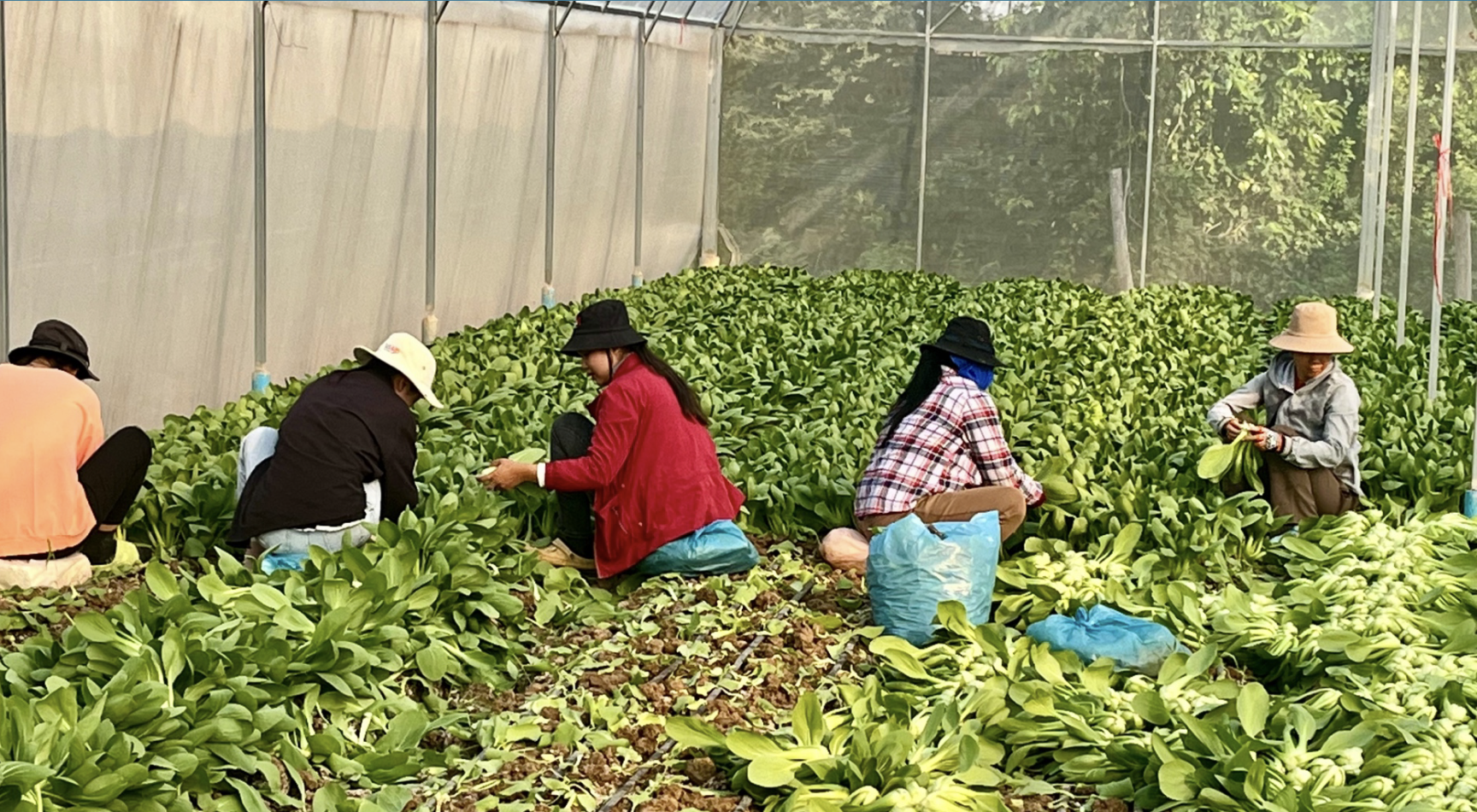
Just Results conducted the final evaluation of Feed the Future Cambodia HARVEST II. The purpose of HARVEST II was to accelerate the growth of the commercial horticulture sector in the provinces of Siem Reap, Battambang, Phnom Penh and Kampong Thom. The evaluation adopted a mixed-method approach, collecting data through a set of tools including surveys, key informant and in-depth interviews, focus group discussions, etc. Tools were specifically designed to assess the competitiveness, inclusivity, and resilience of the horticulture sector. To understand the degree of positive change achieved along these dimensions, the team created indicators to measure scale, sustainability, and depth of change. The analysis culminated in an illustration depicting the level of overall systems change in the horticulture sector and the contribution of Harvest II to these changes. The deliverables included a robust evaluation plan, a participatory 2-day workshop to co-develop the recommendations with project staff and USAID/Cambodia, draft and final evaluation reports, and a 3-part blog summarizing the lessons learned.
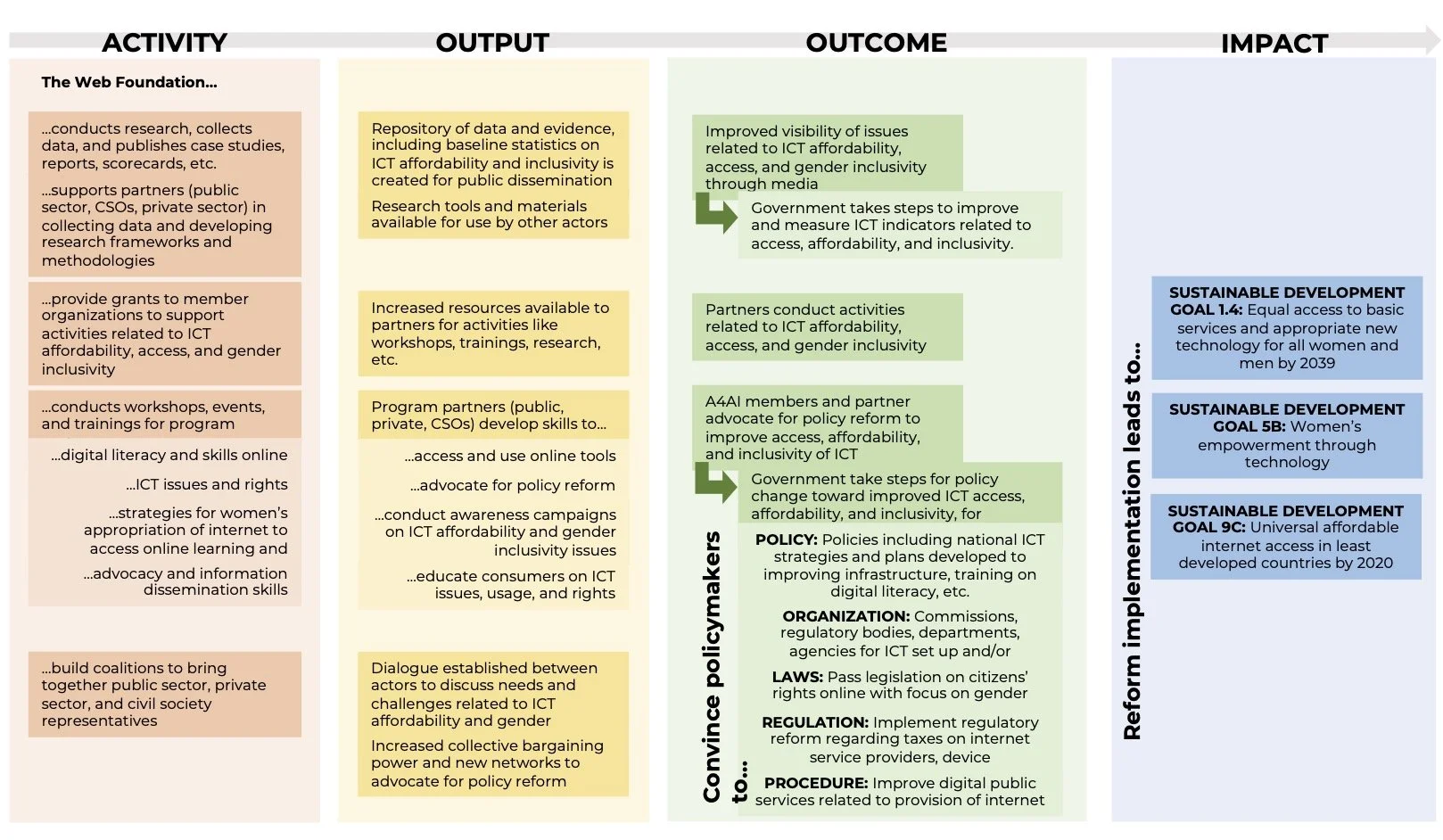
Just Results conducted an independent evaluation of the World Wide Web Foundation’s Alliance for Affordable Internet (A4AI) and Women’s Rights Online (WRO) programs, which work to advance affordable internet access, digital inclusion, and women’s digital empowerment across developing countries. Covering two program phases (2016–2022), the evaluation assessed the effectiveness, relevance, efficiency, sustainability, coherence, and impact of the Foundation’s efforts to influence national and global digital policy reform. Using a mixed-methods approach that combined stakeholder surveys, key informant interviews, participatory workshops, secondary research, and analysis of global ICT indicators, Just Results evaluated progress toward policy change, coalition building, and achievement of Sustainable Development Goal targets related to digital access and gender equality. The study culminated in a revised theory of change, a comprehensive assessment of program results, and practical recommendations to strengthen policy reform tracking, stakeholder engagement, and long-term program impact.
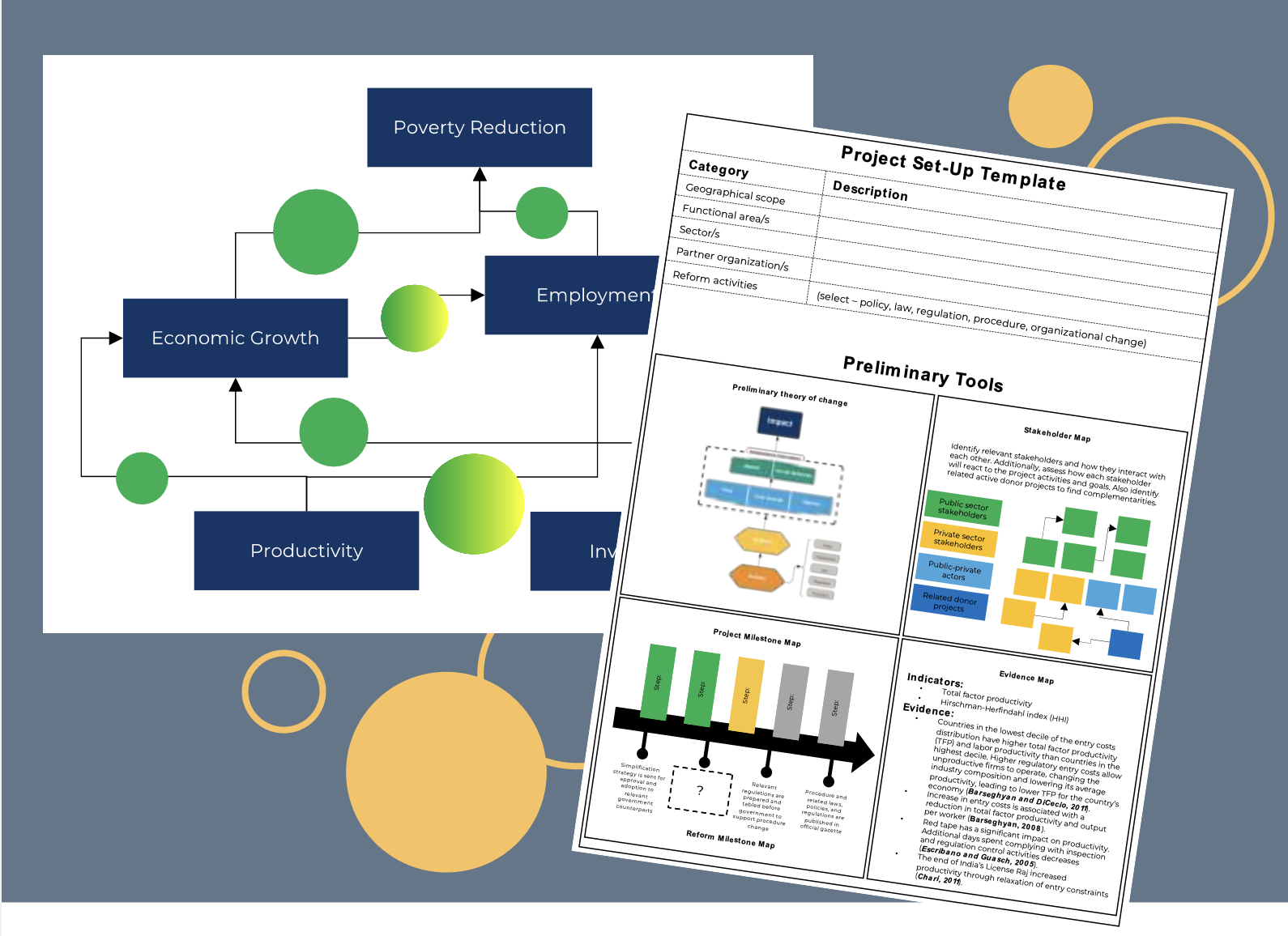
Following the development of a comprehensive technical report for the Donor Committee for Enterprise Development (DCED), Just Results produced a companion guidance note that translates the report’s research findings into practical tools for donors, governments, and development practitioners. Building on an extensive review of global evidence, stakeholder consultations, case studies, and a newly developed theory of change for business environment reform (BER), the guidance note provides actionable frameworks for project design, results measurement, baseline development, indicator selection, and reform tracking. Together, the technical report and guidance note help strengthen evidence-based business environment reform programming and improve measurement of outcomes related to investment, productivity, employment, and economic growth.
![Enhancing the Use of Evidence and Results Measurement in Business Environment Reform Programming [Download Report]](https://images.squarespace-cdn.com/content/v1/5bf455c1cef372e49e9c95b4/1762901141044-LH6UZHL7R4D8XP4GVY0F/Screenshot%2B2025-11-11%2Bat%2B5.44.16%25E2%2580%25AFPM.png)
The Donor Committee on Enterprise Development (DCED) is a forum for facilitating exchange and sharing information among 24 member agencies including international organizations, government and philanthropic agencies, multilaterals, and bilateral donors. Together these agencies spend more than USD$9.9 billion per year on projects that aim to improve the business enabling environment in developing countries. At the request of the committee’s Business Environment Reform (BER) Working Group and contracted through the World Bank, Just Results conducted research to address questions posed in the scope of work including achieving a strong narrative on how BER contributes to overarching impacts of structural transformation, leading to higher productivity, increased investment and more and better jobs
![Food for Progress Trade Safe (TraSa) Project Midterm Evaluation Report [Download Report]](https://images.squarespace-cdn.com/content/v1/5bf455c1cef372e49e9c95b4/1762896553496-8TPW22OXICFPEKUSBYTJ/504a9044-56e3-4dd1-a0fa-e1ac71bb5926+copy.jpg)
Just Results conducted the mid-term evaluation of the Food for Progress (FFPr) Trade Safe (TraSa) project, funded by the USDA FFPr program and implemented by IESC in the Dominican Republic. TraSa focuses on the commercialization and safety of fresh fruits and vegetables leaving and entering the Dominican Republic. Just Results employed a mixed-methods approach that built on the work of the baseline evaluation and drew from data collected by the project’s monitoring, evaluation, and learning (MEL) team. Fieldwork included surveys of horticulture farmers, key informant interviews (KIIs) and focus group discussions (FGD) with stakeholders including value chain actors, project and partner staff, government representatives, and civil society actors. The final product was an evaluation report assessing the effectiveness and impact of the project.
![Final Evaluation of SAFE Agriculture/Food Export project [Download Report]](https://images.squarespace-cdn.com/content/v1/5bf455c1cef372e49e9c95b4/1640118410885-F5ZEH9KAG13JUWKH7H4O/PHOTO-2021-12-21-14-25-42.jpg)
Just Results led a final evaluation for the $16 million USDA funded SAFE Agriculture/Food Export (SAFE) project implemented by NCBA-CLUSA in the Dominican Republic to support the local dairy and beef value chains. This evaluation included extensive mixed methods research including surveys of close to 1,000 farmers and dairy and beef processors, as well as key informant interviews (KIIs) and focus group discussions (FGD) with various value chain stakeholders, project and partner staff, government stakeholders, and civil society actors. The final result was a final evaluation report assessing the effectiveness and impact of the project and making recommendations for future projects supporting the Dominican Republic dairy and beef value chains.